

Did you know that a structured 12-week psychological skills training program can significantly enhance cricket performance?
According to sports psychology research, mental training techniques, including visualization, have been shown to improve focus, decision-making, and confidence among athletes.
Studies show that cricketers who integrate visualization techniques into their training experience sharper focus, improved decision-making, and greater confidence under pressure.
Whether you’re a beginner learning the fundamentals or an advanced player refining your strategy, mastering the mental game is just as crucial as physical training.
In this guide, we’ll explore five powerful visualization techniques that can take your cricket skills to the next level.
Understanding Visualization in Cricket
Visualization is more than just daydreaming about success. It’s a scientifically proven mental training technique where athletes create detailed mental images of specific scenarios and outcomes.
By repeatedly visualizing different game situations, players can prepare their minds for real-world challenges, leading to better execution on the field.

How to Practice Effective Visualization:
- Find a quiet space: Choose an environment with minimal distractions to focus entirely on mental rehearsal.
- Close your eyes and breathe deeply: Deep breathing helps you enter a relaxed state, making visualization more effective.
- Engage all your senses: Imagine the sights, sounds, and feelings of being on the field, whether it’s the ball hitting the bat or the crowd cheering.
- Recreate real-game scenarios: Picture yourself executing key skills like batting against a pace bowler, setting up a strong field placement, or bowling a perfect yorker.
Repeat consistently: Visualization is most effective when practiced daily as part of a structured training routine.
In cricket, visualization helps players:
- Anticipate different match situations: Mentally rehearsing various game scenarios, such as facing a fast bowler on a tricky pitch or executing a match-winning shot, improves adaptability and readiness.
- Improve decision-making abilities: Seeing yourself successfully reading the bowler’s delivery or making split-second fielding decisions sharpens your in-game responses.
- Build confidence before and during matches: Confidence comes from preparation. Visualizing success, such as hitting boundaries or taking crucial wickets, instills self-belief and mental resilience.
- Enhance overall performance through mental rehearsal: Repetitive mental practice of techniques, from perfecting a cover drive to executing a flawless yorker, strengthens muscle memory and game awareness.
By incorporating visualization into your training routine, you can gain a competitive edge, react more instinctively in critical situations, and elevate your overall cricket performance.
Technique #1: Pre-Match Visualization
By incorporating visualization into your training routine, you can gain a competitive edge, react more instinctively in pressure-packed scenarios, and elevate your overall cricket performance. For example, Australian cricket legend Steve Waugh famously used visualization techniques to mentally rehearse key moments before stepping onto the field, helping him stay composed and execute In high-stakes moments.
- Create a quiet, comfortable space: Find a distraction-free environment where you can focus entirely on your mental preparation.
- Imagine specific match scenarios: Picture yourself in different game situations, such as batting against a fast bowler or setting up the perfect fielding placement.
- Visualize different pitch conditions: Whether it’s a dry, spinning track or a seaming green wicket, mentally adjust your approach to match the conditions.
- Picture yourself successfully handling various opponent strategies: See yourself reading the bowler’s variations, executing the perfect shot, or making a strategic fielding adjustment.
- Focus on positive outcomes and successful plays: Reinforce confidence by vividly imagining yourself scoring runs, taking wickets, and contributing to your team’s success.
By consistently practicing pre-match visualization, you can enter each game with a clear, confident mindset, ready to perform at your best.


Technique #2: The "Just in Time" Visualization
This powerful in-game technique helps players maintain focus between balls and overs, ensuring they stay mentally sharp and composed in critical situations. Unlike pre-match visualization, which is done in advance, “Just in Time” visualization happens in real-time, allowing cricketers to make quick mental adjustments and stay ahead of the game.
Here’s how to use it effectively:
- Take a deep breath between deliveries: A controlled breath helps reset the mind and keeps emotions in check, preventing distractions.
- Quickly visualize your next action: Whether it’s executing a textbook cover drive or perfectly positioning yourself for a catch, mentally see yourself doing it successfully.
- Imagine the perfect execution: Picture the ball coming towards you, your stance, timing, and follow-through, ensuring a precise mental rehearsal.
- Use the gaps in play to reset and refocus: Cricket offers natural pauses between deliveries and overs—use these moments to recalibrate and reinforce confidence.
- Build confidence by reimagining successful outcomes: Recall past successful shots, wickets, or strategic plays to remind yourself of your abilities and boost self-assurance.
By integrating “Just in Time” visualization into your game, you can maintain peak concentration, react instinctively to in-game challenges, and perform consistently during intense gameplay.
Technique #3: Multi-Sensory Visualization
Research shows that engaging multiple senses makes visualization more effective by creating a vivid and immersive mental experience. This technique enhances recall, strengthens muscle memory, and improves performance under real-world conditions.
Here’s how to use multi-sensory visualization in your cricket training:
- Sound: Hear the crack of the bat as you time your shots perfectly or the crowd cheering after a brilliant play.
- Touch: Feel the grip of the bat in your hands, the texture of the cricket ball, or the sensation of the turf underfoot.
- Sight: See the ball’s trajectory as it leaves the bowler’s hand, watch yourself executing a cover drive, or visualize the perfect fielding position.
- Movement: Experience the flow of your bowling action, the footwork required for a defensive stroke, or the energy in your sprint between the wickets.
- Environment: Sense the atmosphere of the game—imagine the heat of the sun, the cool breeze, or the sounds of your teammates communicating on the field.
By incorporating all five senses into your visualization practice, you can create a more detailed and realistic mental simulation. This approach helps bridge the gap between practice and actual performance, making it easier to execute skills instinctively during key moments.

Transforming your match experiences into learning opportunities is a crucial part of growth as a cricketer. Post-match visualization allows players to review their performance, make adjustments, and build confidence for future games. Here’s how to use post-match reflection effectively:
- Review key moments from the match: Replay significant plays in your mind—both successful and challenging ones—to analyze what worked and what didn’t.
- Visualize corrections for mistakes: Mentally reconstruct moments where errors occurred and visualize yourself executing the correct technique next time.
- Reinforce successful plays: Strengthen positive behaviors by repeatedly visualizing moments where you excelled, such as a well-timed boundary or a crucial wicket.
- Create a mental library of positive experiences: By storing successful moments in your mind, you can build confidence and recall them in future matches to boost self-belief.
- Plan specific improvements for future matches: Use visualization to map out adjustments, whether it’s refining your batting stance, improving footwork, or enhancing fielding reactions.
Post-match visualization turns every game into a stepping stone for improvement, allowing you to evolve strategically and stay mentally prepared for your next challenge. One way to track progress is by maintaining a post-match journal, where you record key takeaways from each game. Noting successful plays, areas for improvement, and visualized corrections can help reinforce learning and create a structured approach to skill development.

Technique #5: Personalized Visualization Plans
At CricMax, we understand that every player is unique. Our certified coaches help develop personalized visualization techniques that go beyond generic training methods. By tailoring mental training to your specific needs, we ensure maximum effectiveness.
Here’s how a personalized visualization plan can benefit you:
- Address individual player needs: Each player has different strengths and weaknesses—our plans target areas that need the most improvement.
- Focus on specific skill development: Whether it’s batting, bowling, or fielding, visualization exercises are customized to enhance particular aspects of your game.
- Integrate with physical training: Mental and physical preparation go hand in hand. Our visualization strategies complement on-field training sessions for holistic improvement.
- Build long-term mental resilience: Strengthening mental toughness through visualization helps players stay confident, composed, and competitive when facing tough competition.
- Track and measure progress: With structured visualization routines, players can monitor improvements over time, refining their mental approach based on performance insights.
By adopting a personalized visualization plan, you can take control of your mental game and unlock your full potential on the cricket field. Just like physical training, mental preparation is a key factor in achieving consistency and peak performance. By integrating these visualization techniques into your routine, you’ll develop stronger focus, greater resilience, and the confidence to perform at pivotal points in the game.
Expert Coaching at CricMax
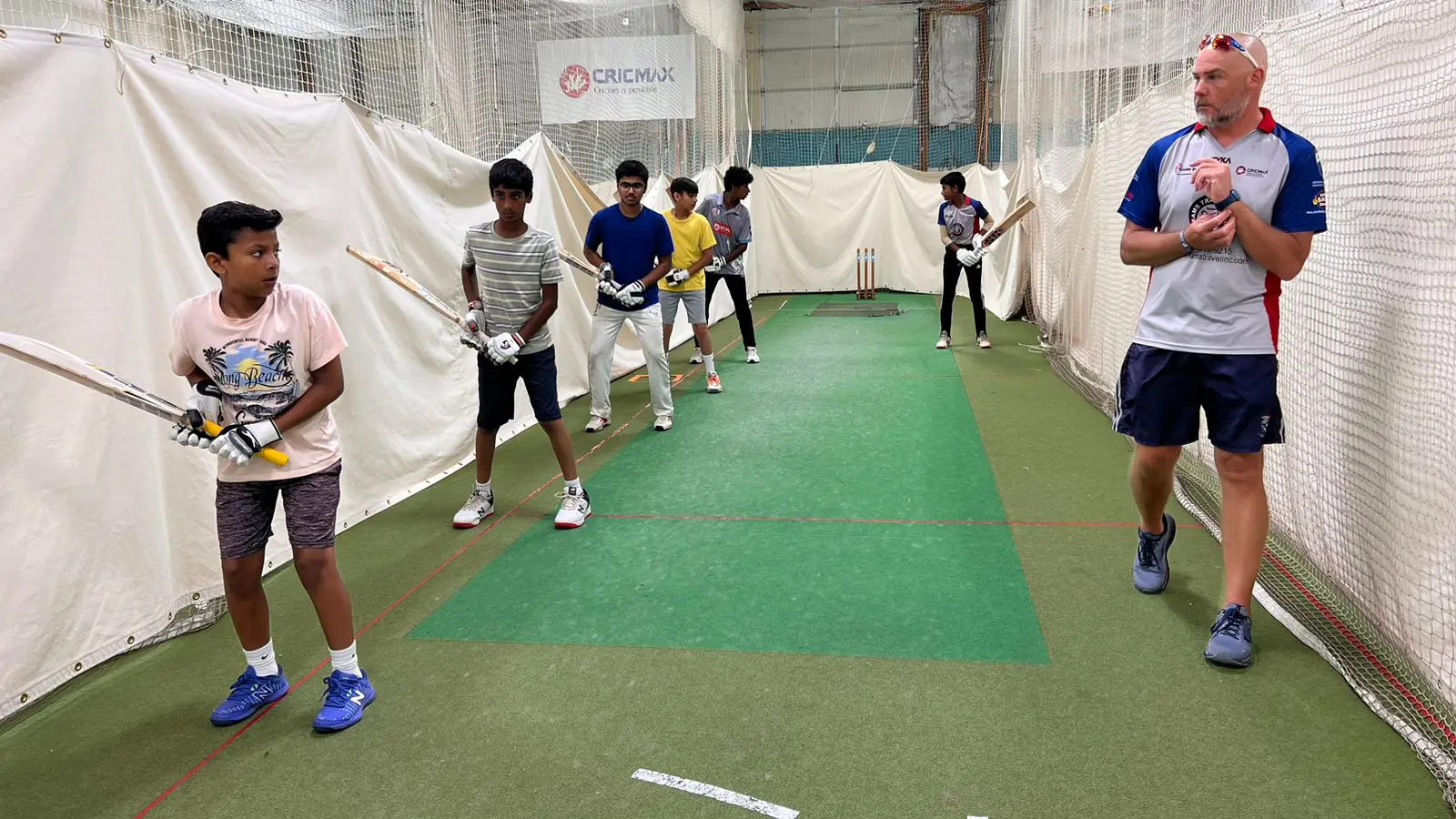
At CricMax, we provide world-class coaching in a supportive learning environment designed to help players master both the physical and mental aspects of the game. Our expert coaches offer:
- Personalized mental training programs: Tailored strategies to enhance focus, confidence, and game awareness.
- Integration of visualization techniques in regular practice: Helping players incorporate mental training into their daily routines.
- Small group sizes for individual attention: Ensuring players receive focused guidance and constructive feedback.
- Progressive skill development: Structured coaching programs that build technical, tactical, and mental resilience.
- A supportive learning environment: Encouraging growth, teamwork, and continuous improvement.
With expert coaching at CricMax, you can take your game to the next level by combining physical training with the power of visualization.
Final Thoughts – Unlock Your Full Potential with Visualization
Visualization is a game-changing technique that can elevate your cricket performance by sharpening focus, confidence, and decision-making. By implementing these five visualization techniques and working with CricMax’s expert coaches, you’ll develop the mental strength needed to perform under pressure and excel on the field.
Ready to take your game to the next level?
📅 Book a free trial session at CricMax today here and discover how our comprehensive training programs, including visualization techniques, can help you achieve your cricket goals.
📞 Contact us at 617-299-9989
🌐 Visit our website to learn more here
Read More – Take Your Cricket Skills Further!
📝 You May Also Like:
- How to Choose the Right Cricket Coaching for Your Child
https://cricmax.com/how-to-choose-the-right-cricket-coaching-for-your-child/
- Transforming Young Players: The Impact of CricMax’s Level 1 Program
https://cricmax.com/transforming-young-players-the-impact-of-cricmaxs-level-1-program/
- The 3 Keys to Keeping Kids Engaged in Sports
https://cricmax.com/the-3-keys-to-keeping-kids-engaged-in-sports/