
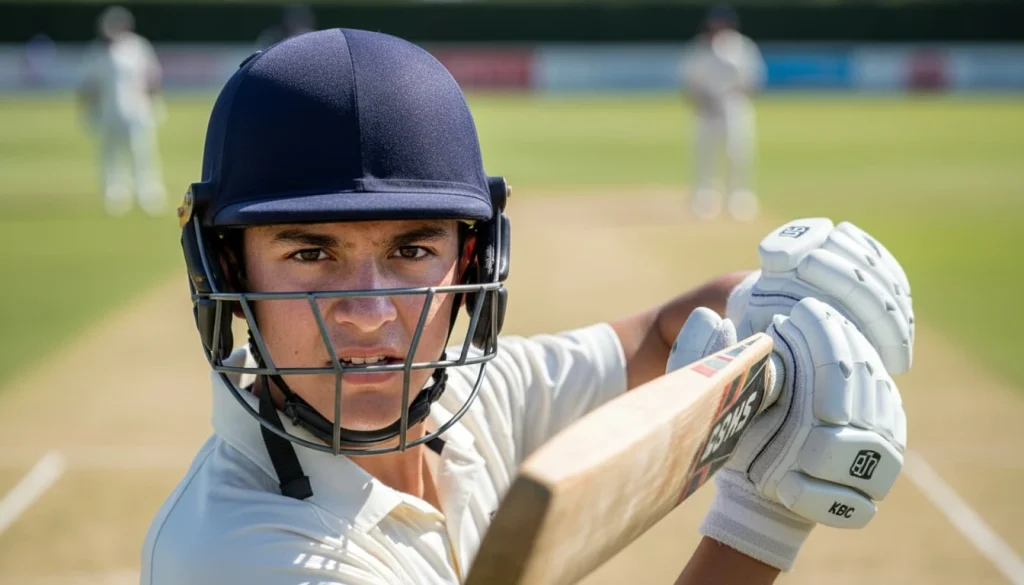
Ever watch your child head out to the pitch and wonder what’s going through their mind? You’ve helped them practice their batting and bowling, but how do you help them handle the pressure when the game is on the line? Physical talent is crucial, but the secret ingredient that separates good players from great ones is often found between the ears. Developing a champion’s mindset early on is the key to unlocking not just their performance, but their long-term enjoyment of the game. This isn’t about being the toughest kid on the field; it’s about being the most resilient, confident, and joyful one.
In this guide, you’ll learn how to help your child build a true champion’s mindset, step-by-step.
Key Takeaways
- A champion’s mindset is not about being tough; it’s about being resilient, confident, and joyful.
- Young players can develop mental skills through simple, practical exercises like visualization and positive self-talk.
- Parents and coaches play a crucial role in creating a supportive environment that nurtures mental strength.
- A structured framework helps build confidence progressively, from learning the basics to competing under pressure.
- Focusing on effort and enjoyment over outcomes is the key to fostering a lifelong love for the game.
Table of Contents

What is a Champion's Mindset (and Why It's More Than "Toughness")?
When we hear the phrase “mental toughness,” we often picture a stoic, unflappable athlete who never shows emotion. But for a young player, that’s an intimidating and unrealistic standard. The modern approach is much healthier: we call it mental fitness.
Mental fitness isn’t about ignoring feelings of nervousness or disappointment. It’s about acknowledging them and having the tools to manage them. For a child just starting out, this could be as simple as overcoming the shyness of joining a new team or the fear of looking silly when they
swing and miss. It’s about building the courage to try, fail, and try again with a smile. This approach fosters resilience and, most importantly, protects their love for the game.
What’s the biggest mental hurdle you see your young athlete facing? Often, it’s the fear of making a mistake. By shifting the focus from “toughness” to “fitness,” we give them permission to be human while teaching them how to bounce back.
Now that we’ve reframed what a champion’s mindset really means for a young player, let’s explore the practical tools you can give them. These simple, effective skills are the building blocks of confidence and resilience on and off the pitch.
5 Core Mental Skills for Young Cricketers
Think of these five skills as a starter toolkit for your child’s mental game. These aren’t complex psychological theories but simple, actionable mental training drills for cricket that you can introduce in a fun and supportive way.
1. The Power of Visualization
Visualization is like a mental dress rehearsal. It’s the simple act of “seeing” success before it happens. When a player can vividly imagine hitting a perfect cover drive or bowling a ball that clips the top of the stumps, their brain creates a neural pathway that makes the real thing feel more familiar and achievable.
How to practice it: Find a quiet moment before a practice or game. Ask your child to close their eyes and imagine themselves on the cricket field. Prompt them with questions: “What does the bat feel like in your hands? Can you see the bowler running in? Picture the ball leaving their hand and see yourself hitting it perfectly. Where does the ball go? How does it feel to run?”


2. Positive Self-Talk
The voice inside a young player’s head is the most influential coach they’ll ever have. Negative thoughts like “I can’t do this” or “I hope I don’t mess up” create anxiety and tension. The goal is to help them replace that inner critic with an inner coach
Quick Self-Talk Scripts: Encourage them to use short, powerful phrases.
- “One ball at a time.”
- “I’ve practiced this. I am ready.”
- “It’s okay to make a mistake. I’ll get the next one.”
3. The "Reset" Word Technique
Mistakes are inevitable in cricket. A dropped catch, a poor shot—it’s easy for a young player to get stuck on that one moment. The “reset” word is a simple but powerful tool to help them move on instantly.
How it works: Help your child choose a single, strong word they can say to themselves immediately after a mistake. It could be “Focus,” “Next,” or “Reset.” The physical act of saying the word (even under their breath) serves as a mental trigger to leave the mistake in the past and refocus on the present moment.
4. Goal Setting for Confidence
Nothing builds youth cricket confidence faster than a sense of accomplishment. However, outcome-based goals like “score 50 runs” are often outside a player’s complete control. Instead, focus on small, achievable process goals.
Examples of process goals:
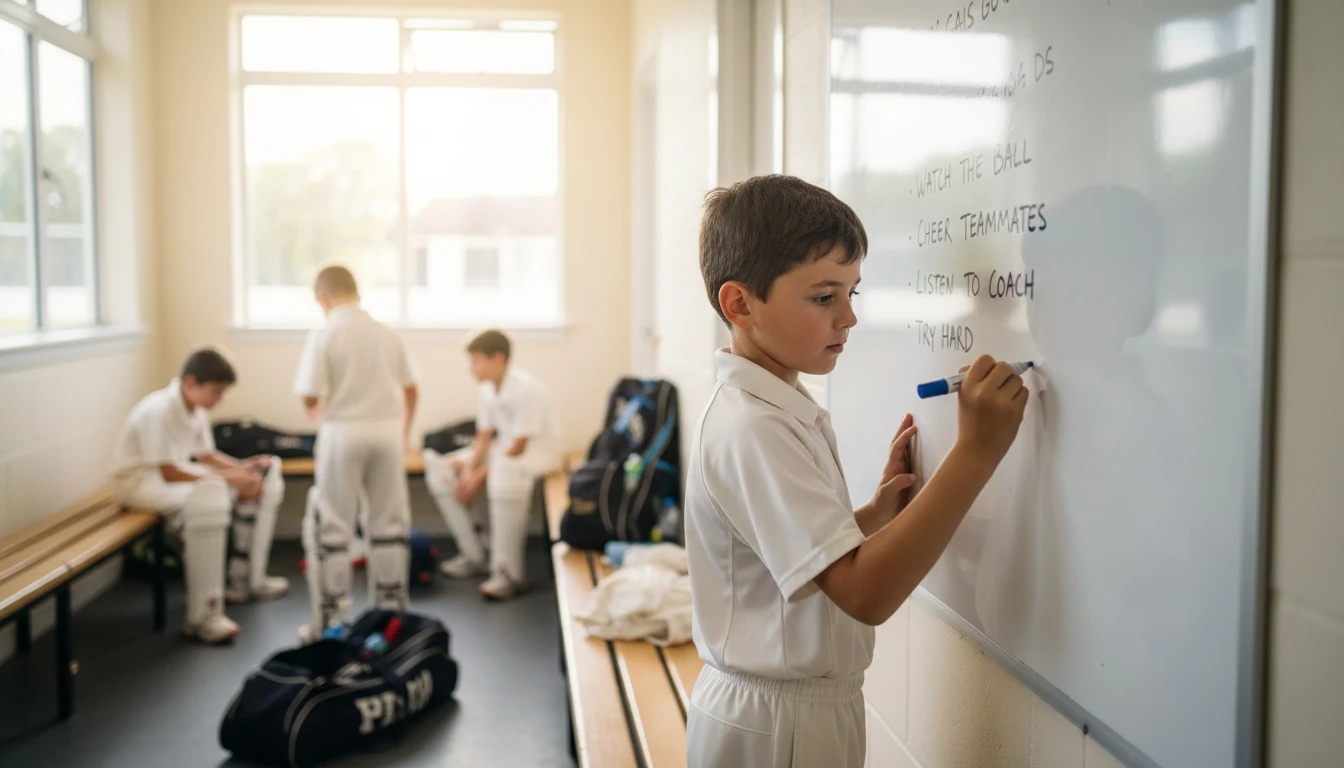
- “I will watch the ball onto the bat for every shot.”
- “I will cheer for my teammates, no matter what.”
- “I will try the new bowling grip my coach showed me.” These small wins build a foundation of self-belief and give players a sense of control over their own development.
5. Focusing on Effort, Not Just Results
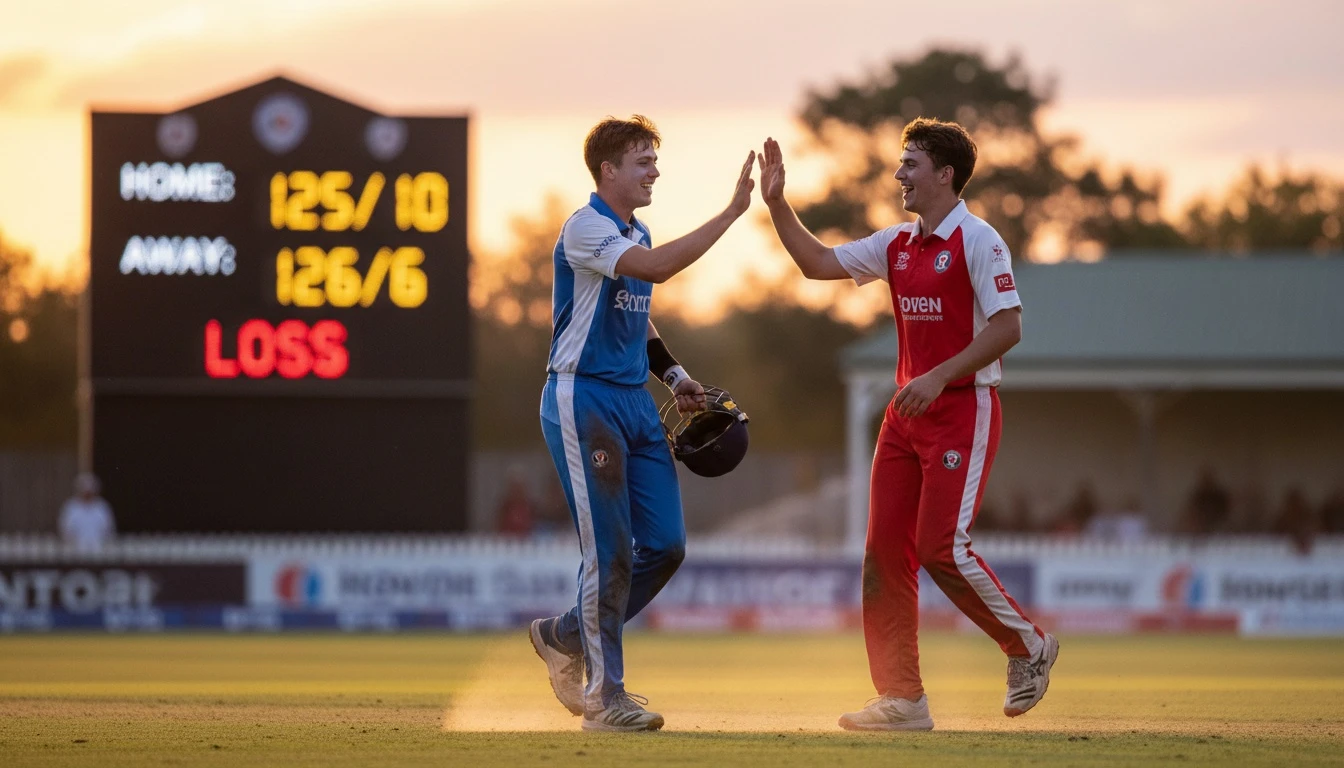
The car ride home after a game is a critical moment. If the first question is “Did you win?” it sends the message that the result is all that matters. To build intrinsic motivation, praise their effort, sportsmanship, and resilience above all else. Celebrate the dive they made in the field, the way they supported a teammate, or how hard they worked in practice all week.
These mental skills provide a fantastic foundation, but a player’s mindset is also shaped by the environment around them. This is where parents and coaches become the most important part of the equation.
A Parent's & Coach's Guide to Nurturing a Champion's Mindset
A young player can practice all the self-talk in the world, but if their environment is filled with pressure and fear of failure, it won’t stick. As the key adults in their life, parents and coaches are the architects of that environment. This section of our parent’s guide to youth sports is all about building a supportive foundation.
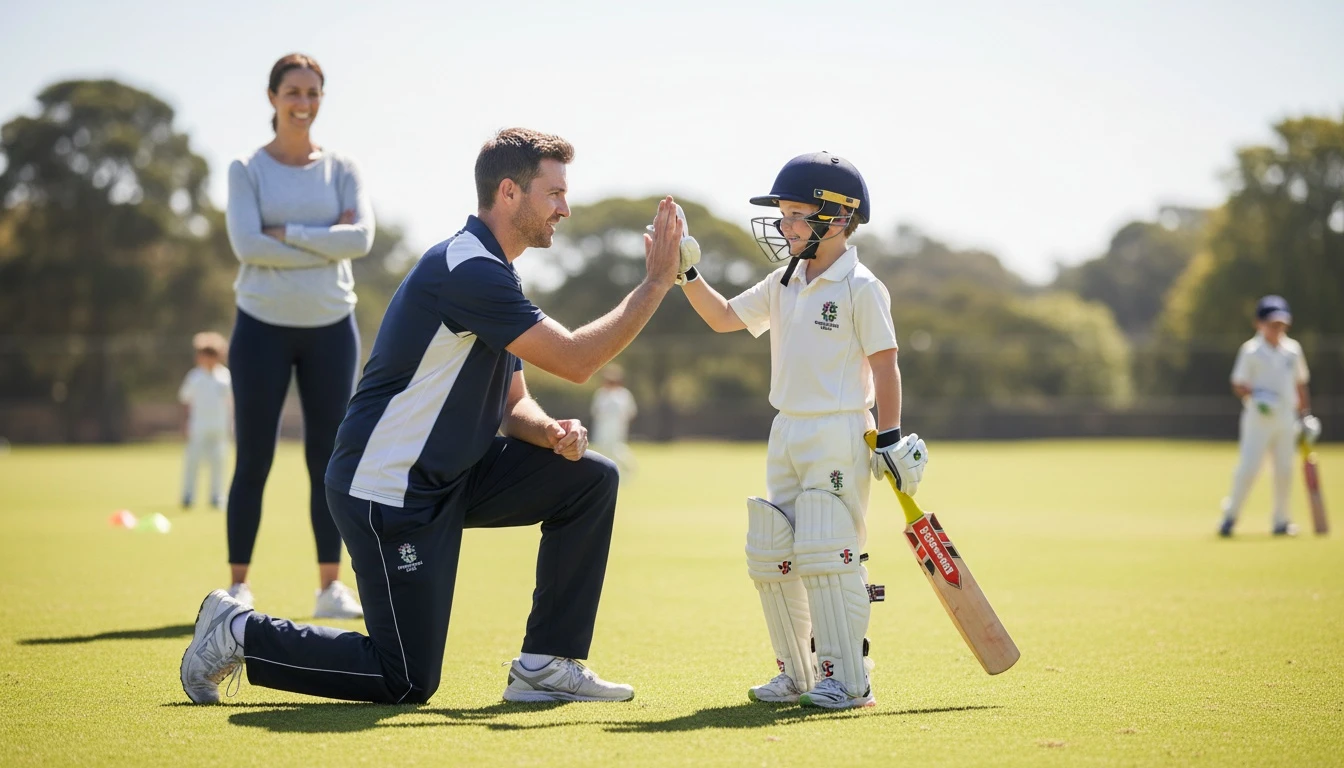
The principles of positive coaching in cricket are simple but transformative. It’s about focusing on development, celebrating small wins, and remembering that the primary goal is to foster a lifelong love for the game.
Checklist for Parents & Coaches:
✅ Frame Feedback Constructively:
Instead of saying, “You shouldn’t have swung at that ball,” try, “That was a tough delivery! Next time, what could you look for to help you decide whether to play or leave it?” Focus on the future, not the past.
✅ Celebrate Effort:
Make a point to praise their hard work. Say things like, “I loved seeing you run so hard between the wickets today,” or “Your focus during practice was incredible.” This reinforces that their effort is what you value most.
✅ Listen Actively:
Ask open-ended questions like, “What was your favorite part of the game today?” or “How did you feel out there?” This shows you care about their experience, not just their performance.
✅ Keep it Fun:
Never lose sight of the fact that this is a game. At CricMax, our philosophy on youth development is built around the pillar of “Joyful Cricket.” When kids are having fun, they are more engaged, creative, and resilient.
Creating this positive environment is the first step. But to make mental development a core part of training, it helps to have a proven system.
Beyond Tips: A Framework for Building Mental Champions
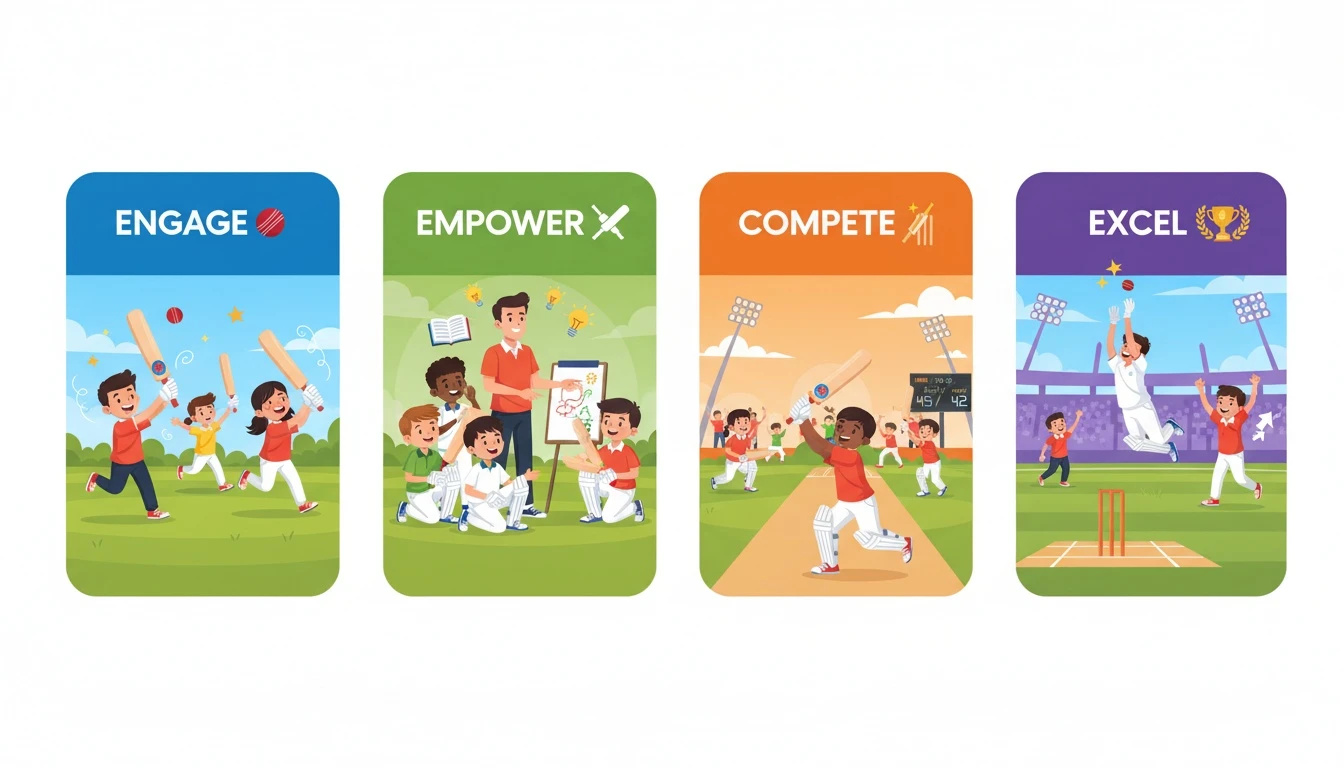
Individual tips are helpful, but a structured approach ensures that no child’s confidence is left to chance. Instead of hoping kids naturally grow more confident, we can intentionally guide them through key stages of development designed to meet young players where they are.
The journey has four stages:
- Engage: It all starts with fun. In this first stage, we create a low-pressure, high-energy environment where kids can fall in love with the game. By reducing the fear of failure, we build an initial foundation of joy and excitement.
- Empower: Once a player is engaged, we use personalized coaching to build their skills. As their competence grows, so does their self-belief. Coaches and mentors focus on character as much as technique.
- Compete: With a foundation of fun and skill, we introduce healthy competition. This teaches players how to handle the natural pressures of a real match in a supportive setting, applying their skills when it counts.
- Excel: For those who want to take their game to the next level, advanced mentorship and training help them achieve peak performance.
This journey begins in our Level 1 ‘Fun & Learn’ Coaching Program, which is specifically designed to build a positive foundation and help young players overcome the initial fears and shyness that can hold them back.
Structure is valuable—but the real magic happens when it’s brought to life by a community that truly cares.
It Takes a Village: The Power of a Supportive Community
A player’s mindset isn’t just shaped by coaches and parents; it’s also molded by their peers. A “family-like atmosphere” where teammates cheer for each other’s successes and pick each other up after a mistake is one of the most powerful tools for building mental resilience.
When a young cricketer feels like they belong and are valued for more than just their on-field performance, they feel safe to take risks, make mistakes, and grow. This sense of belonging is a core part of our Community Connections pillar at CricMax, where friendships are built on and off the pitch. We’ve seen firsthand how a supportive team environment can transform a shy, hesitant player into a confident leader.
You can read about some of our players’ journeys and successes on our Cricmax Blog, where we celebrate the achievements that come from hard work and great teamwork.
Build Their Confidence, On and Off the Field
Building a champion’s mindset isn’t a one-week fix; it’s a journey of patience, practice, and positive reinforcement. By focusing on the 5 core mental skills—visualization, positive self-talk, a reset word, process goals, and celebrating effort—you can provide your child with a powerful toolkit for success. Remember, your role as a parent or coach is to create a supportive environment where it’s safe to fail and fun to try.
Ready to see how a positive coaching environment can transform your young player? Watch how our coaching builds confident cricketers from day one.
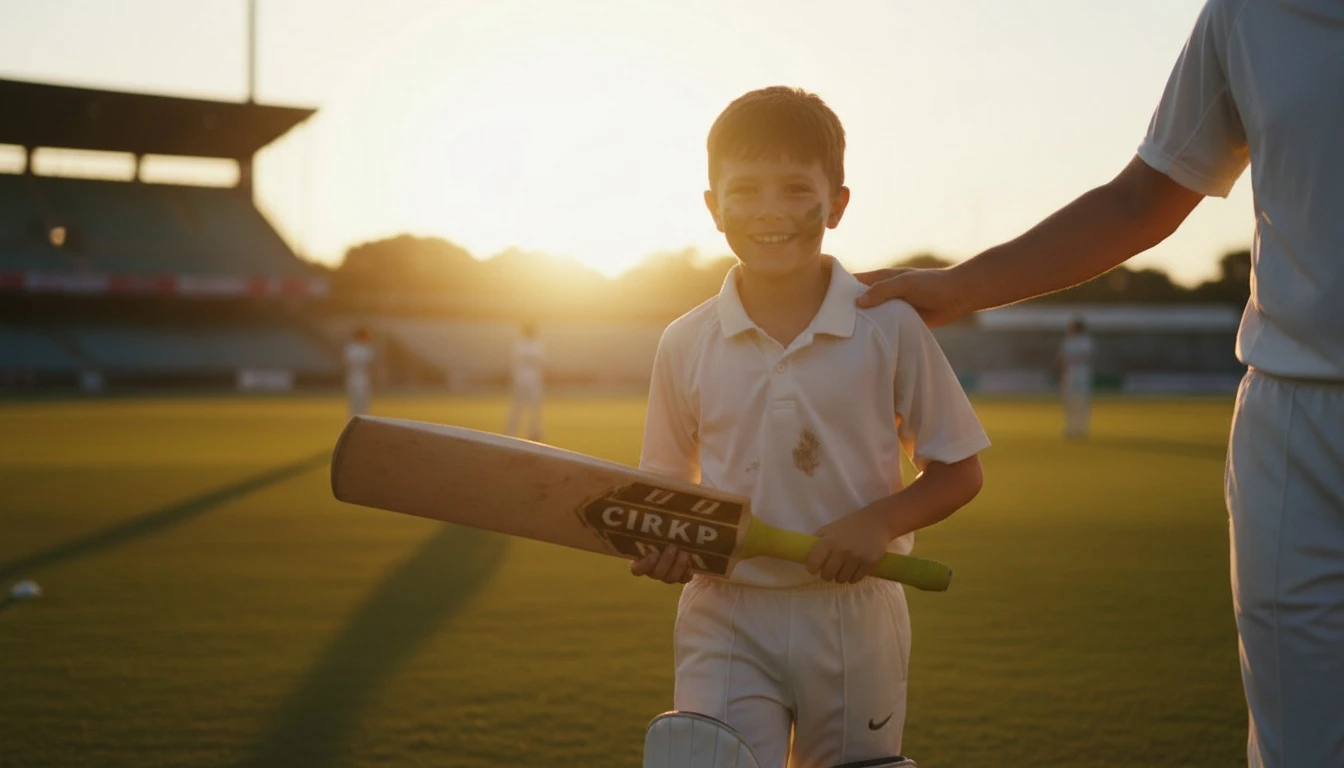
Imagine your child stepping onto the pitch, not with fear, but with a smile—confident, prepared, and excited to play the game they love. That is the true victory.
Frequently Asked Questions (FAQs)
- My child is very shy. How can I help them build confidence to join a team?
Start by focusing on fun in a low-pressure setting. Our Level 1 ‘Fun & Learn’ Coaching Program is perfect for this. It’s designed to introduce the game through engaging activities where the goal is participation and enjoyment, not performance. This helps shy kids come out of their shell at their own pace. - What’s the best way to talk to my child after a bad game?
Focus on effort and ask open-ended questions. Avoid critiquing their performance. Instead, try saying, “That looked like a tough game. I was so proud of how you kept trying your best.” Then, ask, “What’s one thing you learned today?” or “What was the most challenging part?” This turns a negative outcome into a positive learning opportunity. - At what age should we start focusing on these mental skills?
You can introduce these concepts in a simple, age-appropriate way as soon as they start playing. For a 6-year-old, “positive self-talk” might just be, “You can do it!” For a teenager, it can become a more structured routine. The key is to keep it fun and never let it feel like a chore.
4. What if my child puts too much pressure on themselves?
This is very common. Help them reframe their goals. Shift their focus from outcomes (getting a certain number of runs) to processes (watching the ball, using a specific technique). Celebrate their effort and remind them that their value isn’t tied to their performance. A healthy perspective on sports starts at home.